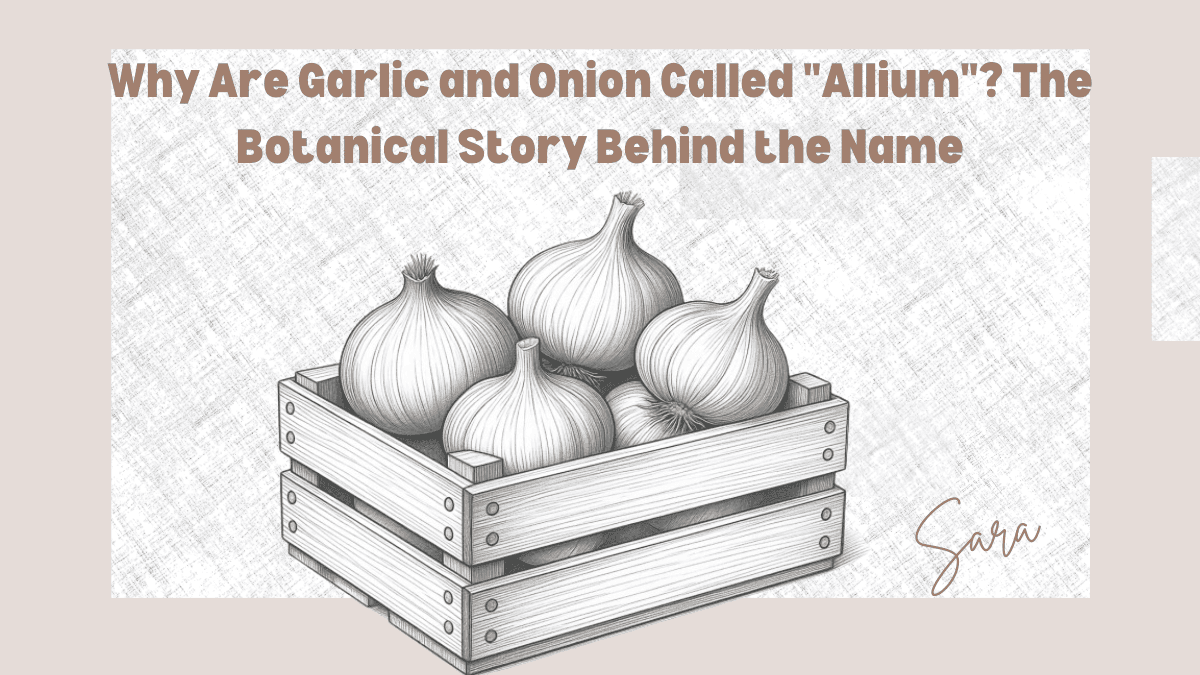
If you’ve spent any time on this site, you’ve seen the word “allium” everywhere; it’s right there in “allium-free cooking.” But what does it actually mean, and why do garlic and onion share this one name? Here’s the short botanical story.
Allium Is a Genus, Not Just a Nickname
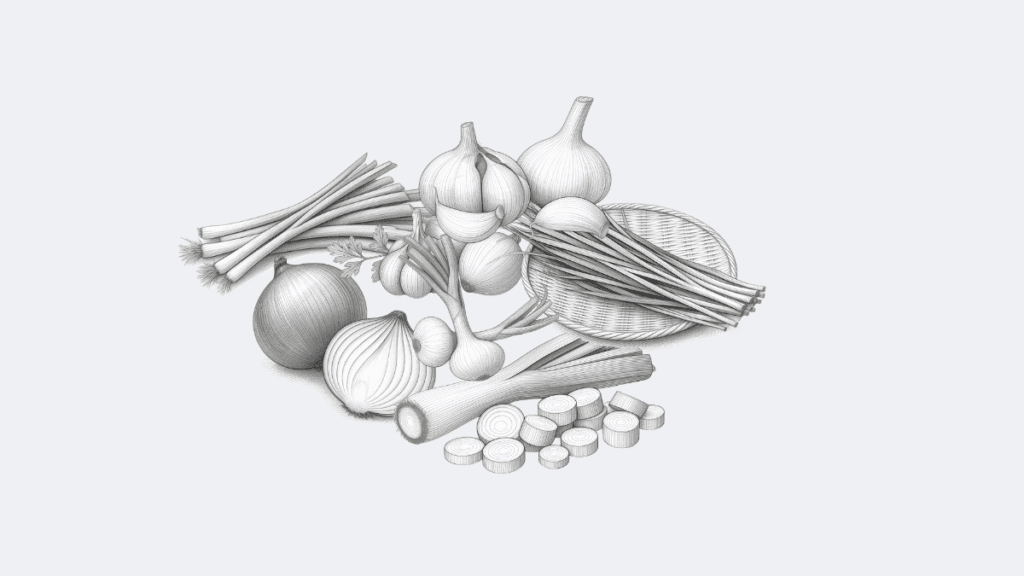
Allium is the scientific genus name for a group of flowering plants that includes garlic, onion, leeks, shallots, chives, and scallions. In plant taxonomy, a genus groups together species that share close evolutionary relationships and physical traits, so calling garlic and onion “alliums” isn’t a cooking term, it’s a botanical classification, the same way “citrus” groups oranges, lemons, and limes.
Where the Word “Allium” Comes From
The name traces back to Latin, where allium was simply the word for garlic. Some etymologists connect it further back to the Celtic word “all,” meaning “pungent” or “hot,” a fitting root, since the entire genus is defined by that same sharp, sulfurous bite.
That sulfur connection isn’t just a coincidence of flavor. Every plant in the Allium genus produces sulfur-containing compounds, the same compounds responsible for the smell of cut onions, the sting in raw garlic, and the tears that come with chopping either one. It’s the plant’s natural defense mechanism, and it’s also exactly why alliums taste and smell so distinct from nearly everything else in the produce aisle.
Which Foods Actually Count as Allium?
If you’re cooking allium-free, this is the list that matters:
Garlic
Onion (yellow, white, red, and sweet varieties)
Leeks
Shallots
Scallions / green onions
Chives
All six come from the same genus and belong to the same family of sulfur compounds, which is why someone with an allium sensitivity typically needs to avoid all of them, not just garlic and onion. It also explains why powdered or dehydrated versions (garlic powder, onion powder) still count: the compound doesn’t disappear when the plant is dried.
Why This Matters for Allium-Free Cooking
Understanding why these ingredients are grouped together is actually useful in the kitchen, not just trivia. Once you know that the shared trait across the whole genus is that sulfur-forward pungency, it’s easier to understand why the substitutes on this site work as well as they do:
Asafoetida mimics garlic’s savory depth through its own sulfur compounds, without being an allium itself.
Star anise and lemongrass replace the aromatic base onion usually builds, through warmth and citrus rather than pungency.
Fresh ginger brings a different kind of sharpness that fills a similar role to garlic in a dish.
None of these are alliums, which is exactly the point. They deliver a comparable effect through a completely different chemical pathway, which is what makes allium-free cooking possible without the food tasting like something’s missing.
The Bottom Line
Garlic and onion are called “Allium” because that’s their actual genus in plant classification. This family also includes leeks, shallots, chives, and scallions, all united by the same sulfur compounds that give them their signature bite. For allium-free cooking, that shared chemistry is the reason the whole group gets avoided together, and it’s also the reason substitutes need to work differently rather than just being a “milder” version of the same thing.