This post contains affiliate links. I may earn a small commission if you purchase through my links, at no extra cost to you.
If you’ve ever Googled “how to cook without onion and garlic” at 10pm in a mild panic, this blog is for you.
I’m not a professional chef. I’m a mom, and one of my children has a severe allergy to onions, garlic, and shallots. That means no sneaking them in, no “just a little bit,” and definitely no trusting a restaurant menu that says “may contain.” We learned that lesson the hard way.
So I figured it out. Slowly, imperfectly, and with more than a few trips back to the drawing board. But mostly? I figured it out.
Why We Cook at Home (And Skip the Restaurants)
Eating out with an onion and garlic allergy is genuinely difficult. Most restaurants either don’t offer vegetarian options at all, or the ones they do have are underwhelming, bland, uninspired, and often still cooked with allium-based sauces or broths. When your child already feels different, sitting at a table with nothing exciting on the menu makes that feeling worse.
I wanted my kids to sit down to dinner and feel included, not like outsiders eating a sad side salad while everyone else eats the good stuff. That’s why we cook at home. And it’s why I started experimenting.
My Secret Substitutes for Onion and Garlic
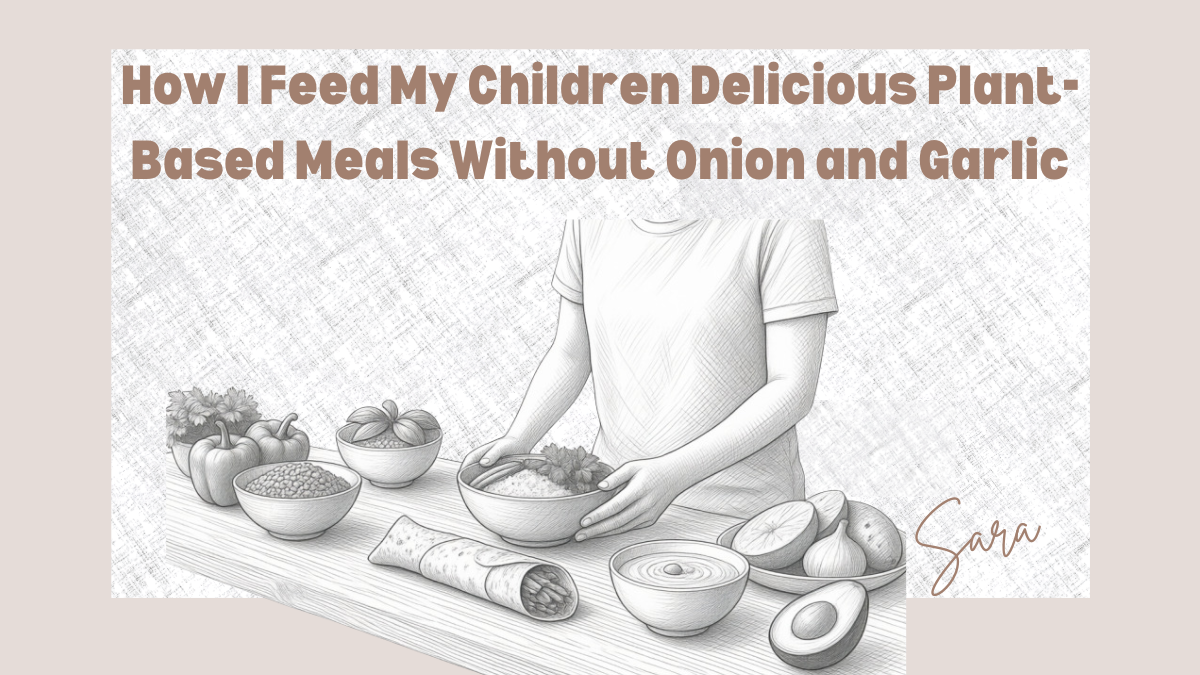
Here’s what I’ve learned after years of allium-free cooking: you don’t need onions or garlic to get depth, aroma, and flavor. You just need to know what to reach for instead.
Asafoetida (Hing)
This is my number-one swap. A tiny pinch of asafoetida in hot oil gives you that savory, slightly pungent depth that onion and garlic usually provide. It’s a staple in Indian cooking, and once you start using it, you’ll wonder how you ever lived without it. (Note: some blends contain wheat, so check the label if gluten is also a concern.)
Dill, Oregano, Thyme & Rosemary
Fresh or dried, these herbs bring warmth and complexity to any dish. I use them generously, they’re not just garnishes in our kitchen, they’re the backbone of our flavor. Paprika Powder
My kids don’t love big chunks of fresh bell pepper in their food, but they love the sweet, smoky flavor paprika gives. It’s become a staple in almost everything I make.
Hoisin Sauce, Vegan Oyster Sauce, Sweet Soy Sauce & Black Soy Sauce
These sauces are flavor powerhouses. They add umami, sweetness, and that “something extra” that makes a dish taste like it came from a real kitchen. not a list of safe substitutes. All of these are onion-and-garlic-free (always double-check labels), and together they create a rich, layered sauce base for stir-fries, noodles, and more.
Allergy-Friendly Vegetarian Cooking: What I’ve Learned
Not every recipe works on the first try. Sometimes I nail it. Sometimes I look at what I’ve made and think, “okay, we’re ordering tonight.” But more often than not, the recipes actually taste good, really good, because I’m putting thought and love into every substitution.
Taste is personal. What works for my family might need tweaking for yours. But the core principle is the same: you can cook flavorful, satisfying, inclusive meals without the ingredients everyone assumes are non-negotiable.
The Game Changer
For a family navigating both allergies and a vegetarian lifestyle, finding a protein that’s satisfying, versatile, and safe is huge. Beyond Beef holds up in stir-fries, pasta sauces, stuffed peppers (without the actual big pepper pieces, naturally), and more. If you’re in a similar situation and haven’t tried it yet, it’s worth looking into.
Follow Along
This blog is our family’s journey through onion-free, garlic-free, vegetarian cooking, the wins, the experiments, and yes, the occasional failures. If you’re an allergy parent, a vegetarian looking for new ideas, or just someone tired of bland “safe” food, you’re in the right place.
Subscribe and follow along as we explore more recipes, share more substitutions, and keep proving that allergy-friendly food doesn’t have to be boring.