This post contains affiliate links. I may earn a small commission if you purchase through my links, at no extra cost to you.”
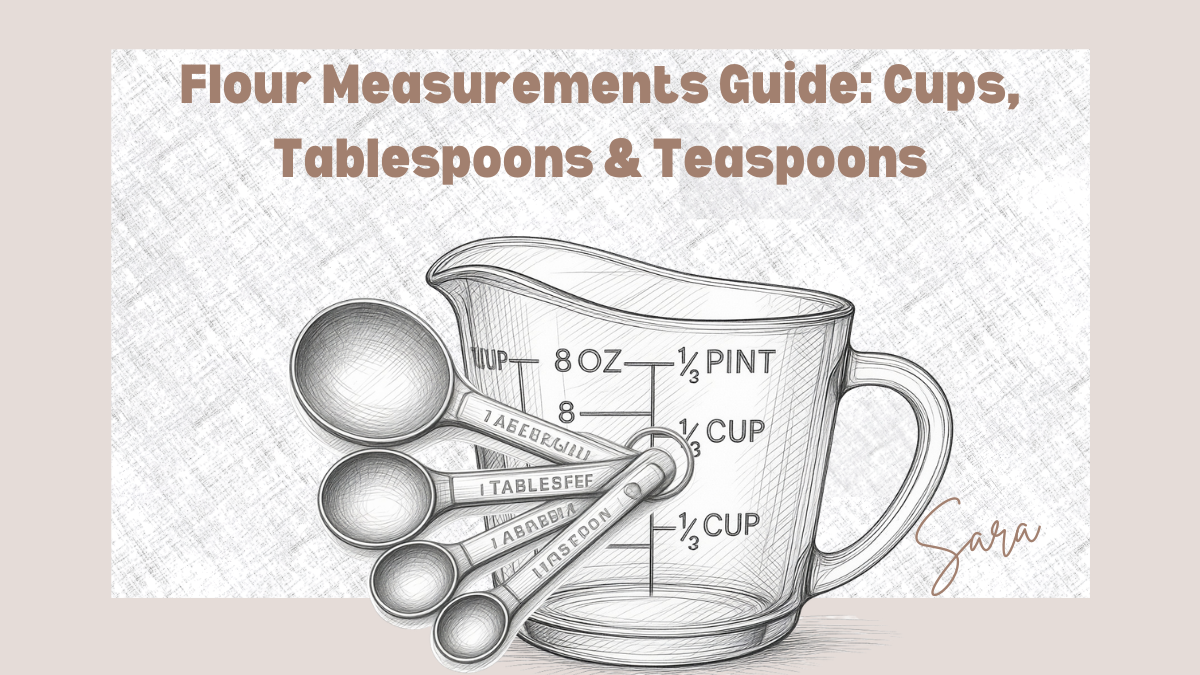
Ever paused mid-recipe wondering exactly how many tablespoons are in a cup of flour, or whether your measuring cup is giving you an accurate amount? Flour measurements trip up even experienced home cooks and getting them wrong is one of the most common reasons baked goods turn out dense, dry, or gummy. This guide breaks down every conversion you need, from teaspoons to cups to grams, so your baking comes out right every time.
Why Accurate Flour Measurement Matters
Flour is the backbone of most baked goods, and even small measuring errors can throw off a recipe:
Too much flour makes bread, cakes, and cookies dense, dry, or tough. Too little flour can leave batter too wet, causing baked goods to collapse or turn gummy. Scooping directly from the bag with a measuring cup packs in extra flour, often 20–25% more than intended.
The most accurate method is always weighing flour with a kitchen scale, but this guide gives you reliable conversions for when you’re measuring by volume instead.
Flour Measurement Conversion Chart
| Measurement | Equivalent |
|---|---|
| 1 tablespoon | 3 teaspoons |
| 1/16 cup | 1 tablespoon |
| 1/8 cup | 2 tablespoons |
| 1/4 cup | 4 tablespoons |
| 1/3 cup | 5 tablespoons + 1 teaspoon |
| 1/2 cup | 8 tablespoons |
| 2/3 cup | 10 tablespoons + 2 teaspoons |
| 3/4 cup | 12 tablespoons |
| 1 cup | 16 tablespoons |
Flour Cups to Grams and Ounces
Weight is the most reliable way to measure flour, since a “cup” can vary depending on how the flour is scooped and packed. Here’s how standard all-purpose flour converts:
| Cups | Grams | Ounces |
|---|---|---|
| 1/4 cup | 30 g | 1.1 oz |
| 1/3 cup | 40 g | 1.4 oz |
| 1/2 cup | 60 g | 2.1 oz |
| 2/3 cup | 80 g | 2.8 oz |
| 3/4 cup | 90 g | 3.2 oz |
| 1 cup | 120 g | 4.2 oz |
| 2 cups | 240 g | 8.5 oz |
Note: these gram measurements are for the “spoon and level” method (see below). Scooping directly from the bag can add 20–30 grams per cup.
How Many Tablespoons in a Cup of Flour?
There are 16 tablespoons in 1 cup of flour. This holds true for all-purpose flour, bread flour, and most standard flours, since the tablespoon-to-cup ratio is a fixed volume conversion regardless of the ingredient.
How Many Teaspoons in a Tablespoon of Flour?
There are 3 teaspoons in 1 tablespoon of flour. This is a standard volume conversion that applies to flour as well as most other dry ingredients.
The Right Way to Measure Flour by Volume
If you don’t have a kitchen scale, use the spoon and level method for the most accurate cup measurement:
Fluff up the flour in its bag or container with a spoon to aerate it.Spoon the flour into your measuring cup until it’s overflowing, don’t scoop or pack it in.Level off the top with the flat edge of a knife or spatula.
Avoid dipping the measuring cup directly into the flour bag, this compacts the flour and can add up to 25% more than the recipe calls for, leading to dense or dry results.
Common Flour Types and Their Measurements
Different flours can weigh slightly differently per cup due to variations in grind and density:
| Flour Type | Weight per Cup |
|---|---|
| All-purpose flour | 120 g |
| Bread flour | 127 g |
| Cake flour | 114 g |
| Whole wheat flour | 113 g |
| Almond flour | 96 g |
| Coconut flour | 112 g |
Frequently Asked Questions
Is 8 tablespoons the same as half a cup of flour? Yes, 8 tablespoons of flour equals exactly 1/2 cup.
Does 4 tablespoons equal 1/4 cup of flour? Yes, 4 tablespoons of flour is equal to 1/4 cup.
Why does my cup of flour weigh differently than a recipe says? This is usually due to how the flour was measured,scooping directly from the bag packs in more flour than the spoon-and-level method, which can add 20–30 grams per cup and throw off your recipe’s texture.
Should I always weigh my flour instead of using cups? Weighing is more accurate and recommended for precision baking, such as bread or delicate cakes. For everyday cooking and baking, the spoon-and-level method with measuring cups works well as long as it’s done consistently.
Are tablespoon and teaspoon conversions the same for all types of flour? Yes, the volume conversions (tablespoons to cups, teaspoons to tablespoons) stay the same across flour types. Weight per cup, however, does vary by flour type, as shown in the chart above.
This measurement guide is part of the My Kitchen My Home kitchen reference collection, helpful, accurate basics to keep your cooking and baking consistent every time.