This post contains affiliate links. I may earn a small commission if you purchase through my links, at no extra cost to you.
A home that feels good extends past the stove
If you’ve spent any time in my recipes, you already know I’m all about keeping things simple, no onion, no garlic, no fuss. But “no fuss” doesn’t stop at the ingredient list. It starts the moment you open your pantry door.
This is actually the very first post in a new corner of the blog I’m calling Home & Living, a space just for the kitchen-and-home side of things, separate from the recipes and baking guides you’re used to finding here. And what better place to start than the pantry, since it’s the one spot in the kitchen that quietly affects everything you cook.
If you’re new here, you can read more about how this “no onion, no garlic, no fuss” philosophy started on my About page , it’s the same mindset that shapes everything from my spice substitute guide to my baking guides, and now, this new Home & Living section too.
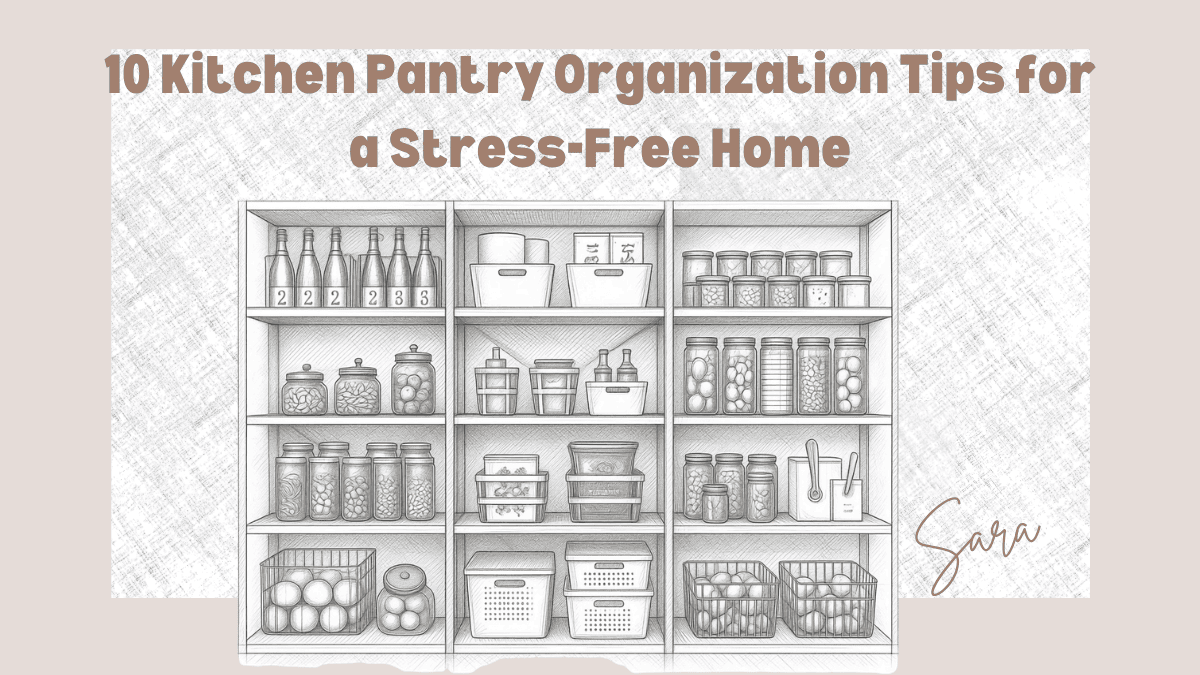
A cluttered pantry doesn’t just look messy,it makes cooking harder. You buy duplicate spices because you couldn’t see the one you already had. You lose track of what’s about to expire. You spend ten minutes hunting for the cornstarch when you could’ve been done in ten seconds. Sound familiar? Here’s how I keep mine under control, without spending a fortune on matching bins.
Empty It Out Completely First
Before you organize anything, take everything out. It’s tempting to skip this step, but you can’t fix what you can’t see. Wipe down the shelves while you’re at it, pantries collect more dust and crumbs than we like to admit.
Group by Category, Not by Size
Sort everything into categories first: baking, grains and pasta, canned goods, snacks, spices, oils, and vinegars. Once you can see how much you actually own in each category, the right storage solution becomes obvious , you might discover you need more space for grains and way less for canned soup.
Decant What You Can
Clear containers for flour, sugar, rice, oats, and pasta do two things at once: they look tidy, and they let you see at a glance when you’re running low. You don’t need a full matching set from day one, start with the staples you use most and build from there.
Give Spices Their Own Zone and Face Them Forward
Spices are the easiest thing to lose track of, and the easiest to duplicate at the store. Keep them together in one spot, and store them label-forward so you’re not lifting every jar to read the side. A small tiered shelf or a shallow drawer insert works well here.
Use Turntables for Anything You Reach Into
Oils, vinegars, sauces, and anything else that tends to hide at the back of a shelf benefits from a lazy Susan. Instead of digging, you spin and grab. This is one of the cheapest upgrades that makes the biggest daily difference.
Store Bulk Buys at the Back, Backups Behind Actives
If you stock up on pantry staples, keep the sealed backups behind the container you’re currently using. That way you always finish one before opening the next, and nothing gets forgotten at the back until it’s stale.
Label Everything
Labels aren’t just for containers. A small label on the shelf edge (“Baking,” “Grains,” “Snacks”) means anyone in the house can put things back in the right spot, not just you. It’s a small thing that saves the whole system from slowly falling apart.
Store Baking Staples Together, Ready to Grab
If you bake often, keep flour, sugar, baking powder, baking soda, and vanilla in one accessible cluster rather than scattered across shelves. When a recipe calls for five pantry staples, you shouldn’t need to search five different shelves to find them.
Do a Reset Once a Month
Organization isn’t a one-time project, it’s a habit. Once a month, spend at least one hour putting stray items back where they belong, checking expiry dates, and topping up your low-stock list. It’s far easier to maintain a system than to rebuild one from scratch every few months.
A Calmer Pantry Makes for Calmer Cooking
None of this requires a full renovation or a cart full of matching containers. Start with one shelf, one category, or even just your spices, and build from there. A pantry you can actually see into is a pantry that makes cooking feel easy instead of like a scavenger hunt, which, if you’ve been here before, you know is exactly the kind of “no fuss” I’m always chasing.
This is just the beginning of the Home & Living section, expect more posts here on kitchen setup, organization, and the everyday home details that make cooking (and living) a little easier.